Design-Build vs. Average Contractor: A Better Way to Remodel Your Kitchen

  |   By  |  0 Comments

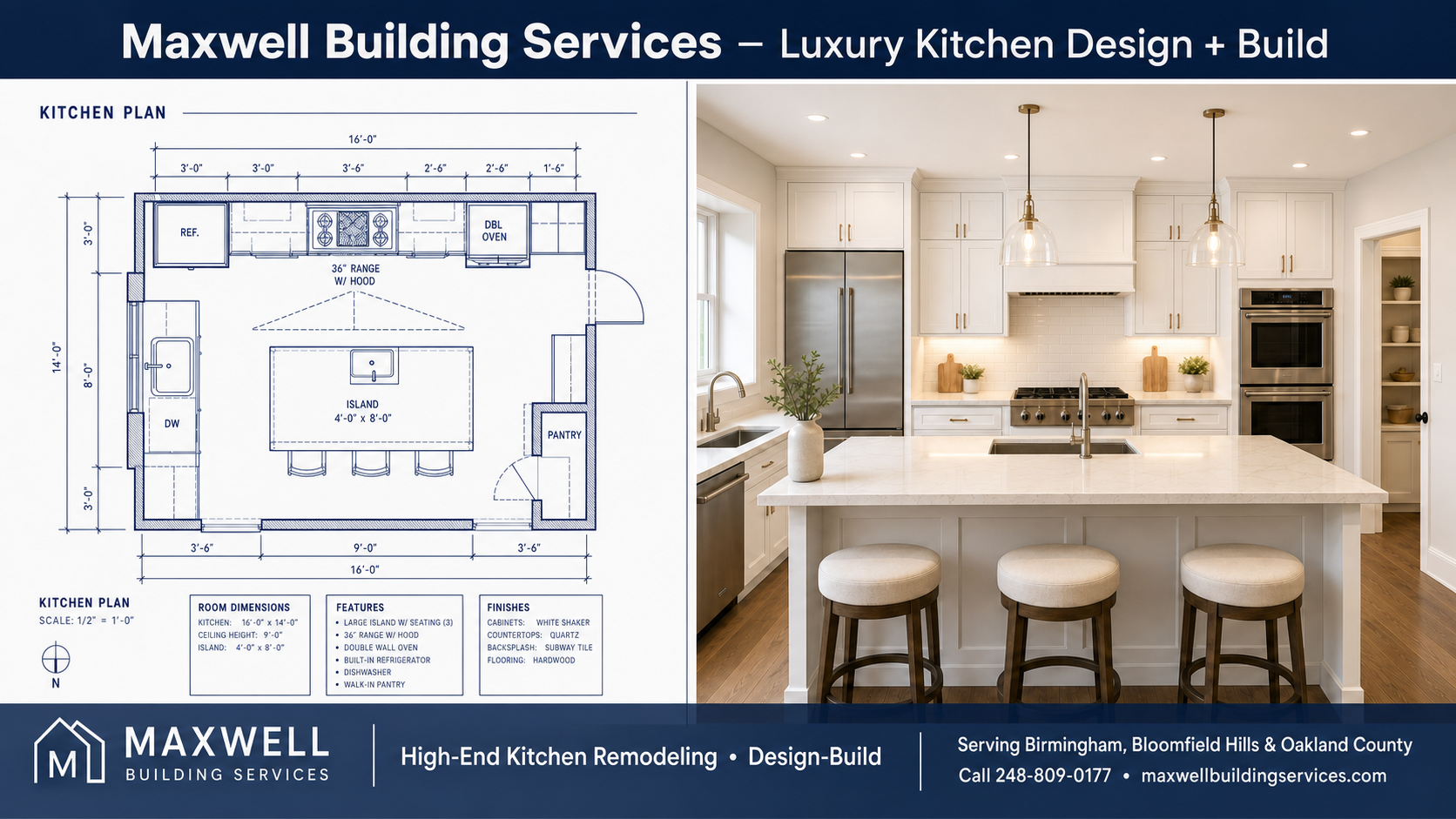
Blueprint and 3D rendering of a luxury kitchen by Maxwell Building Services serving Birmingham, Bloomfield Hills and Oakland County

If you’re planning a kitchen remodel in Birmingham, Bloomfield Hills, or anywhere in Oakland County, you’re probably scrolling through contractors, inspiration photos, and cabinet styles, and feeling a little overwhelmed. A kitchen renovation is a big investment, and the process should feel exciting, not stressful.

One decision will shape your entire experience:
Do you hire a standard contractor, or a design-build firm?

They sound similar, but they deliver a very different journey. Let’s break down why a design-build firm is usually the smarter, more enjoyable choice.

What Exactly Is a Design-Build Firm?

A design-build firm handles both the design and construction of your kitchen remodel under one roof. One team plans your layout, helps you choose materials, manages permits, and builds the project—start to finish.

With an “average” contractor, the design is often:

  • Handled by a separate designer or architect

  • Left up to the homeowner with minimal guidance

  • Created without real-time input from the people who have to build it

That gap between design and construction is where a lot of problems—and headaches—start.

One Team, One Vision (No More Middleman)

Here’s the fun part: with a design-build firm, you’re not stuck playing project manager.

Your designer and builder are on the same team from day one, which means:

  • Your kitchen is designed to be built efficiently, not just to look good on paper

  • Everyone shares the same vision and the same timeline

  • You’re not stuck relaying messages between people who rarely talk to each other

In homes across Birmingham and Bloomfield Hills, where remodeling often involves custom details and higher-end finishes, having one coordinated team makes the process feel much more polished and predictable.

Real-Time Budget Control (And Way Less Sticker Shock)

Let’s be honest, budget surprises are not the kind of surprises anyone enjoys.

When you hire a contractor without integrated design, you might:

  • Approve a gorgeous design

  • Get excited about the layout and finishes

  • Then discover the build cost is way above what you expected

With a design-build firm, pricing and design happen together. As you make choices, cabinet style, countertops, tile, lighting, you get real-time feedback on how each decision affects your overall investment.

That means:

  • Fewer “we need to cut this later” moments

  • Fewer change orders during construction

  • More confidence that the kitchen you’re designing is one you can actually afford to build

Faster Timelines and Fewer Delays

Picture this: your kitchen is torn up, you’re cooking on a hot plate, and every extra week feels like a year.

One of the biggest advantages of design-build is speed. Because the same team is designing and building your project, they can:

  • Finalize drawings more efficiently

  • Order materials at the right time

  • Start construction with fewer unanswered questions

In Oakland County, many design-build firms build their entire process around clear timelines and streamlined communication, which helps projects move more smoothly from concept to completion.

An “average” contractor who doesn’t offer design often ends up waiting for answers, redoing plans, or reworking details mid-project, and you feel every bit of that in your schedule.

Smarter, More Functional Design

A pretty kitchen is nice.
A pretty kitchen that actually works for how you cook, host, and live? That’s the goal.

Design-build firms think about:

  • Traffic flow: How you move from fridge to sink to stove

  • Storage: Where small appliances, pantry items, and cookware really belong

  • Zones: Cooking, prep, cleanup, coffee bar, entertaining

Because designers and builders collaborate from the beginning, the final layout is both creative and practical. In high-end areas like Birmingham and Bloomfield Hills, that combination of style and functionality is what truly elevates a remodel.

With a standard contractor, design decisions can feel more like guesswork. You might pick features that look good, but don’t fully consider how they’ll function once you’re living in the space every day.

Clear Communication and Single-Source Accountability

Here’s something homeowners don’t always think about, but really should:

When something goes wrong, who owns the problem?

With separate designer and contractor teams, you can get stuck in the middle of a blame game. The contractor says, “That’s a design issue.” The designer says, “That’s a construction issue.” Meanwhile, you just want your kitchen finished.

A design-build firm offers:

  • One point of contact

  • One team responsible for both design and construction

  • Clear accountability from the first meeting to the final walkthrough

That kind of structure makes the process feel calmer and more controlled—especially on complex kitchen projects common in Oakland County’s established neighborhoods.

Better Fit for Oakland County Homes

Homes in Birmingham, Bloomfield Hills, and surrounding communities often have:

  • Unique architecture and existing layouts

  • Custom trim, built-ins, and high-end finishes

  • Specific neighborhood character and style to maintain

Design-build firms are especially well-suited to these projects because they can blend thoughtful design with precise construction. They don’t just drop in a generic plan—they tailor a solution to your home and your lifestyle.

An “average” contractor may be great at basic renovations, but without integrated design, they’re more likely to default to what’s easy to build, not what’s best for your home.

Why Homeowners in Birmingham, Bloomfield Hills, and Oakland County Love Design-Build

When you put it all together, the benefits of hiring a design-build firm are hard to ignore:

  • Less stress: One team, one plan, one point of contact

  • Better design: Spaces tailored to how you actually live

  • Stronger budgets: Real-time pricing woven into the design process

  • Smoother timelines: Fewer delays, fewer surprises

  • Higher-quality results: Kitchens that feel cohesive with the rest of your home

In other words, design-build isn’t just a different way to remodel—it’s often a better way to remodel, especially for kitchens in Birmingham, Bloomfield Hills, and throughout Oakland County.

Ready to Start Your Kitchen Remodel?

If you’re thinking about a kitchen remodel in Birmingham, Bloomfield Hills, or anywhere in Oakland County, partnering with a design-build firm is one of the best decisions you can make.

You get a guided, collaborative experience instead of a pieced-together project. You make design decisions with clear budget insight. And you end up with a kitchen that not only looks incredible, but works beautifully day after day.
Restoring a Piece of Detroit History: Bringing Our 1906 Detroit Tudor Into the 21st Century, Part 2

   |   By  |  0 Comments

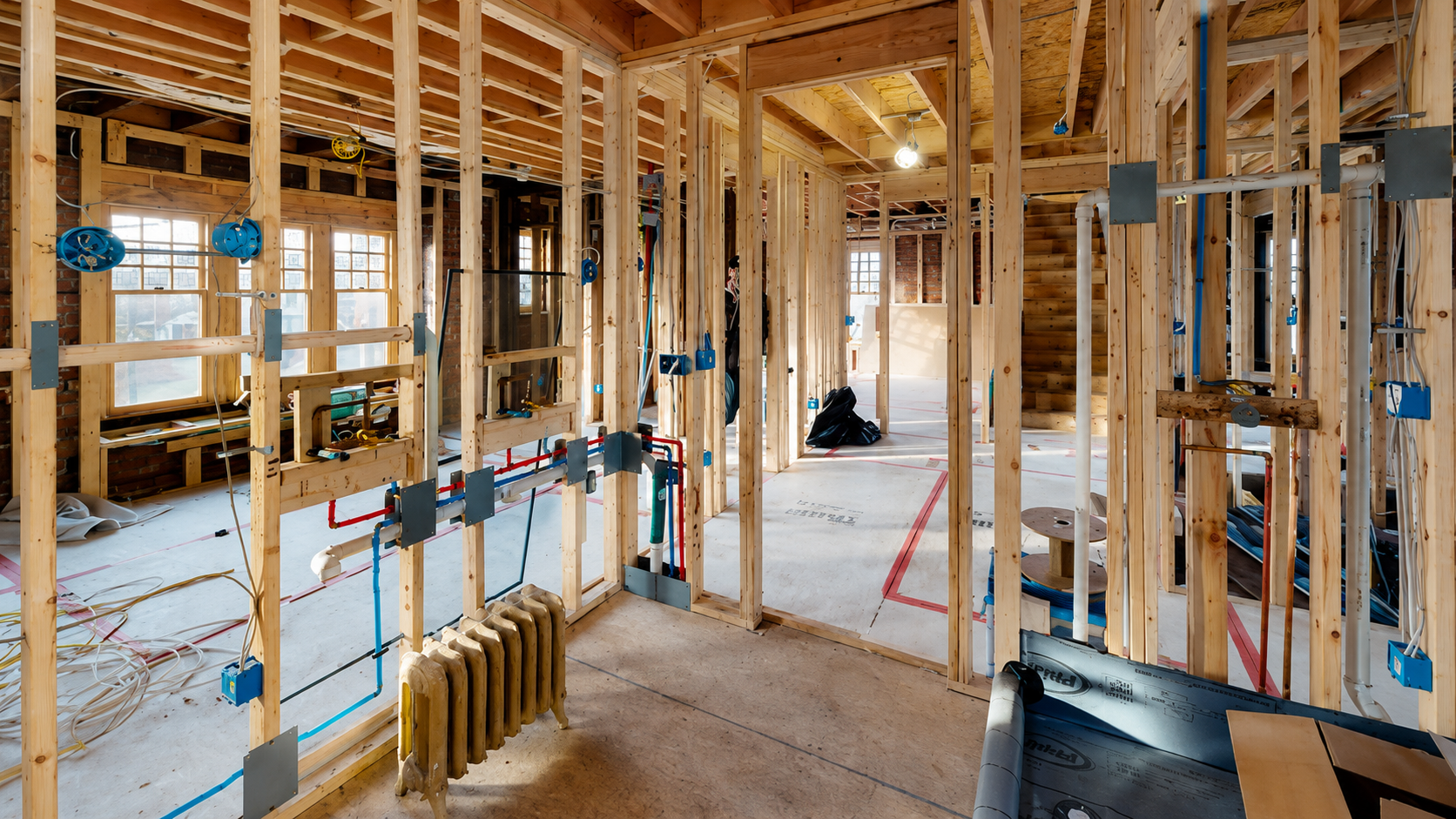
New framing, electrical wiring, plumbing rough-ins, and an original steam radiator during the complete renovation of a 1906 Detroit Tudor by Maxwell Building Services.

Thoughts of: Joe Guadagnino (Owner and Builder)

When we first walked through our 1906 Detroit Tudor, we knew we were buying a home with incredible history. What we didn’t know was just how much work it would take to prepare it for the next century.

Once the walls came down, the house began telling us its story.

Every room revealed another chapter. Wiring that had been added over decades. Plumbing that had been modified by previous owners. Framing that had been altered as families adapted the home to fit their needs. None of it was unusual for a house built in the early 1900s, but it reinforced something we already believed.

If we were going to restore this home, we were going to do it the right way.

Rather than simply replacing what was visible, we made the decision to completely rebuild everything hidden behind the walls. Our goal wasn’t just to create a beautiful home for today. We wanted to build a home our daughters, Frankie and Rose, could one day look back on knowing it was restored to last another hundred years.

Interior framing of a 1906 Detroit Tudor during a full historic home renovation showing new wall framing, structural repairs, rough electrical installation, and floor system improvements by Maxwell Building Services.

With the walls open, we rebuilt the home’s infrastructure from the inside out. This phase of our 1906 Detroit Tudor renovation included new structural framing, rough electrical, plumbing, HVAC preparation, and floor system reinforcement before insulation and drywall.


It all started with the electrical system.

The original service had long outlived its intended lifespan, so we replaced everything. Beginning at the utility pole in the backyard, we installed a brand-new electrical service and completely rewired the home. Every circuit, outlet, switch, and panel is new, giving this 120-year-old home the safety and reliability expected in modern construction while preserving its historic character.

The plumbing received the same level of attention.

Rather than trying to work around generations of previous repairs, every water line and drain was replaced. It’s the kind of work no one will ever notice after the drywall is finished, but it’s one of the most valuable investments you can make during a historic home renovation.

New interior wall framing, plumbing, electrical, and HVAC rough-ins during the complete renovation of a 1906 Detroit Tudor by Maxwell Building Services.

Every system inside this 1906 Detroit Tudor was rebuilt from the ground up. With the walls open, we installed all-new framing, plumbing, electrical, and HVAC systems while preserving the home’s historic architecture and preparing it for another century of family living.


One of the upgrades we’re most excited about is bringing modern comfort to a home built long before air conditioning existed.

We installed central air conditioning throughout the house while preserving one of its most defining features: the original steam radiator system. A new boiler now powers those beautiful cast-iron radiators, allowing us to maintain the warmth and character that have been part of this home for over a century while adding the comfort every family expects today.

High-efficiency HVAC system installed inside the attic of a 1906 Detroit Tudor during a historic home renovation, adding modern air conditioning while preserving the home's original character.

Bringing modern comfort to a 120-year-old home. This new high-efficiency HVAC system provides central air conditioning while working alongside the home’s restored steam heating system, giving our 1906 Detroit Tudor the best of both worlds.

Energy efficiency was another priority.

Homes built in 1906 weren’t designed with today’s insulation standards, so while everything was exposed, we took the opportunity to do what couldn’t be done once the walls were closed. Every exterior wall and the roof structure was spray foamed, and the entire home was carefully air sealed. These improvements will make the house quieter, more comfortable, and dramatically more efficient without changing a single architectural detail.

Spray foam insulation installed along the roof rafters of a 1906 Detroit Tudor during a historic home renovation, with original cast-iron steam radiators preserved by Maxwell Building Services.

Modern performance meets historic preservation. During the renovation of our 1906 Detroit Tudor, we spray foamed the roof structure to improve energy efficiency while preserving the home’s original steam radiators and architectural character. These hidden upgrades will make the home more comfortable for generations without changing its historic appearance.

Of course, restoring a historic home is never just about mechanical systems.

As we worked through the house, we reinforced floor framing, reframed sections of interior walls, repaired structural members, and rebuilt areas of the floor decking that had weakened over time. None of this work will ever be featured in a design magazine, but it’s the foundation that allows every beautiful finish to last for generations.

This stage of the project may not have the glamour of custom cabinetry, marble countertops, or handcrafted trim, but in many ways, it’s the most important part of the entire renovation.

Beautiful finishes are only as good as what’s behind them.

As owners of Maxwell Building Services, we’ve completed countless home renovations throughout Detroit, Birmingham, Bloomfield Hills, Grosse Pointe, Franklin, Plymouth, and communities across Metro Detroit. Every project reinforces the same lesson: quality craftsmanship begins long before the paint goes on the walls.

Standing inside this home today, it’s incredible to think about everything that’s hidden behind the finished surfaces. New electrical. New plumbing. Modern HVAC. Spray foam insulation. Reinforced framing. A completely rebuilt infrastructure that no one will ever see, yet everyone who lives here will benefit from every single day.

Restoring a historic home isn’t about turning back the clock.

It’s about honoring the craftsmanship of the past while giving the home everything it needs for the future.

Our 1906 Detroit Tudor has already stood proudly for more than a century.

Now it’s ready for the next one.

Follow Along With Our Detroit Historic Home Renovation Series

This is Part 2 of our renovation journey, documenting the complete restoration of our family’s 1906 Detroit Tudor.

In Part 3, we’ll take you through one of the biggest transformations of the entire project as we redesign the floor plan and construct a carefully integrated first-floor addition that respects the home’s historic architecture while creating a layout designed for modern family living.

Restoring a Piece of Detroit History: The Story Behind Our 1906 Tudor Renovation, Part 1

  |   By  |  0 Comments

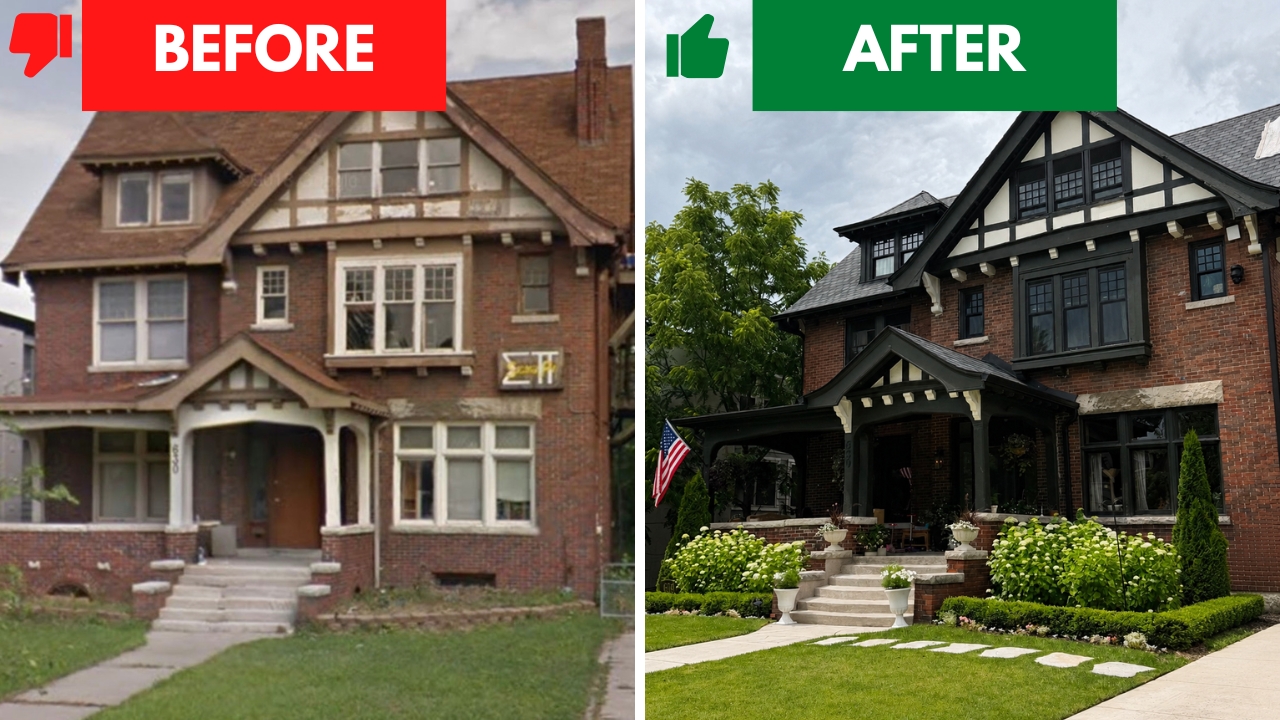
Historic 1906 brick Tudor home in Detroit before renovation and restoration by Maxwell Building Services.

Thoughts of: Joe Guadagnino (Owner and Builder)

Restoring a Piece of Detroit History: The Story Behind Our 1906 Tudor Renovation

Some homes are purchased for convenience. Others are purchased for location. And every once in a while, a home comes along that captures your imagination the moment you walk through the front door.

That was exactly the case when my bride Alyce and I purchased this historic brick Tudor in one of Detroit’s most distinguished historic neighborhoods.

Built in 1906, the home had stood proudly for more than a century. It had witnessed Detroit’s rise as an industrial powerhouse, survived economic downturns, weathered countless Michigan winters, and housed generations of residents. For nearly 40 years, the property even served as housing for students associated with Wayne State University.

While the home had incredible architectural character, it was clear that decades of use, modifications, and deferred maintenance had taken their toll.

Yet beneath the layers of change, we could see something special.

We could see what the home once was.

And more importantly, we could see what it could become again.

Why We Took On This Historic Home Renovation

As the owner of Maxwell Building Services, I’ve spent years helping homeowners throughout Detroit, Birmingham, Bloomfield Hills, Plymouth, Grosse Pointe, Franklin, Beverly Hills, and Metro Detroit transform their homes through thoughtful design and remodeling.

We’ve renovated homes from nearly every era, from historic Tudors and Colonials to modern luxury residences.

But this project was different.

This wasn’t a client’s home.

This was our home.

For Alyce and I, this project represented an opportunity to preserve a piece of Detroit history while creating a home designed for the way our family lives today.

Historic homes have a soul that is difficult to describe.

The craftsmanship, proportions, masonry work, trim details, and architectural elements found in homes built during the early 1900s are incredibly difficult and expensive to recreate today.

Many of the historic homes we work on throughout Detroit, Birmingham, Plymouth, Grosse Pointe, and Bloomfield Hills share these same characteristics. They were built during an era when homes were designed to last generations, not decades.

Unfortunately, many historic homes have experienced renovations over the years that failed to respect the original architecture.

This home was no exception.

What We Found Behind the Walls

What started as a renovation quickly evolved into a full-scale historic restoration and remodeling project.

The home consists of approximately 4,200 square feet of living space and required far more than cosmetic updates.

To properly restore the home, virtually the entire interior had to be removed.

The project involved a complete gut renovation.

Walls came down.

Mechanical systems were removed.

Outdated plumbing and electrical systems were demolished.

Much of the interior framing required modification or replacement.

As we began opening walls, we were constantly reminded how differently homes were constructed in the early 1900s.

Unlike today’s wood-framed construction methods, the exterior walls of this home consist of three wythes of solid brick masonry. In simple terms, there are three full layers of brick making up the exterior structure.

These walls have stood for more than 120 years.

And they will likely stand for another 120.

There is something incredibly impressive about working on a structure built by craftsmen over a century ago.

It reminds you that quality construction never goes out of style.

Historic Home Design Requires a Different Approach

One of the biggest misconceptions about historic home remodeling is that it simply involves updating finishes.

In reality, historic home design requires a completely different mindset.

When renovating a historic home, every decision must balance preservation with functionality.

The goal isn’t to recreate a museum.

The goal is to create a home that respects its original architecture while supporting modern living.

That means understanding period-appropriate materials, architectural details, trim profiles, room proportions, and craftsmanship techniques that were common when the home was originally built.

Many homeowners are surprised to learn that some of the most important design decisions involve what not to change.

Successful historic home remodeling often means preserving original details while thoughtfully integrating modern conveniences.

Throughout this project, we focused on maintaining the home’s architectural integrity while improving functionality, comfort, storage, and flow.

The best historic renovations feel seamless.

Guests shouldn’t be able to tell where the original home ends and the renovation begins.

Designing a Home for the Next 100 Years

One of the biggest challenges with historic home remodeling is finding the right balance between preservation and modernization.

Many homeowners assume historic remodeling means recreating the past exactly as it was.

We see it differently.

Our goal is not to freeze a home in time.

Our goal is to respect the home’s history while making it work for modern life.

That philosophy guided every decision throughout this project.

The floor plan was redesigned to improve flow and functionality.

A new first-floor addition was carefully designed and integrated into the home’s architecture.

Modern conveniences were incorporated throughout the home.

Storage solutions were added where previous generations never needed them.

Mechanical systems were completely upgraded.

And every design decision was made with both beauty and longevity in mind.

We often tell clients that successful historic remodeling is less about making a house look old and more about making new work feel original.

When someone walks through a historic home after renovation, they shouldn’t immediately notice what is new.

Instead, everything should feel like it belongs.

Luxury Design Inspired by the Early 1900s

One of the most rewarding parts of this project was developing the interior design vision.

Rather than chasing trends that may look dated in a few years, we focused on timeless materials and architectural details inspired by the home’s original era.

Custom cabinetry was designed specifically for each space.

Architectural millwork was carefully developed to complement the home’s Tudor and Victorian influences.

Natural stone, handcrafted finishes, premium plumbing fixtures, designer lighting, and custom furniture selections were chosen to create a cohesive design throughout the home.

Every room was considered as part of a larger story.

The goal wasn’t simply to create beautiful spaces.

The goal was to create a home that felt authentic.

Throughout the project, we continually asked ourselves:

“If the original architect walked through this home today, would he believe it belonged here?”

That question became our filter for every design decision.

Historic Home Remodeling Throughout Metro Detroit

While this project is located in Detroit, many of the lessons learned apply to historic homes throughout Metro Detroit.

Communities such as Birmingham, Plymouth, Grosse Pointe, Franklin, Bloomfield Hills, Royal Oak, and Huntington Woods are filled with homes that deserve thoughtful renovation rather than replacement.

Many of these homes feature original craftsmanship, solid construction, and architectural character that simply cannot be replicated today.

When properly renovated, these homes offer a unique combination of history, charm, and modern functionality.

At Maxwell Building Services, we believe preserving these homes is about more than construction.

It’s about protecting the architectural heritage of our communities for future generations.

Why Historic Home Remodeling Matters

One of the reasons we enjoy working on historic homes throughout Detroit and the surrounding communities is that every project is unique.

Unlike production homes, historic homes require creativity, problem solving, craftsmanship, and a deep understanding of architecture.

No two projects are ever the same.

Every wall tells a story.

Every discovery teaches a lesson.

Every challenge presents an opportunity to improve the home while preserving its character.

These homes connect us to the generations that came before us.

When renovated thoughtfully, they can continue serving families for another century.

Historic home remodeling isn’t simply about construction.

It’s about stewardship.


Frequently Asked Questions About Historic Home Renovations

How much does it cost to renovate a historic home in Detroit?

Historic home renovation costs vary significantly based on size, condition, scope, and finish selections. Major historic home renovations often involve structural, electrical, plumbing, HVAC, and architectural restoration work in addition to cosmetic improvements.

Can you add onto a historic home?

Yes. In many cases, carefully designed additions can significantly improve functionality while maintaining the home’s architectural integrity. The key is ensuring the addition complements the original structure rather than competing with it.

Are historic homes harder to renovate?

Absolutely. Historic homes often contain hidden conditions, outdated systems, structural modifications from previous renovations, and unique architectural details that require specialized planning and craftsmanship.

Is it worth renovating a historic home?

For many homeowners, absolutely. Historic homes offer character, craftsmanship, and architectural features that are difficult to replicate in new construction. When thoughtfully renovated, they can provide the best of both worlds: historic charm and modern comfort.

The Beginning of a New Chapter

Today, this 1906 Detroit Tudor is no longer a neglected historic property struggling to meet modern needs.

It is a carefully restored and thoughtfully remodeled family home that honors its past while embracing the future.

For my bride Alyce and me, this project became much more than a renovation.

It became a passion project.

A labor of love.

A chance to preserve a piece of Detroit history while creating a home where our family can build memories for years to come.

Over the coming months, we’ll continue sharing the story behind this remarkable transformation, including the design process, structural challenges, custom cabinetry, historic preservation details, and the countless lessons learned throughout the renovation.

If you’re considering a historic home renovation in Detroit, Birmingham, Plymouth, Grosse Pointe, Franklin, Bloomfield Hills, or anywhere throughout Metro Detroit, we hope this story inspires you to see the potential hidden within these incredible homes.

Because sometimes the most rewarding homes aren’t the newest ones.

They’re the ones with the best stories to tell.

Follow Along With Our Detroit Historic Home Renovation Series

This article is Part 1 of our Detroit Historic Home Renovation Series, documenting the complete restoration, design, and remodeling of our 1906 Tudor home.

In this series, we’ll share the challenges, discoveries, design decisions, and construction techniques involved in transforming a historic Detroit home while preserving its architectural integrity.

Coming Next: Part 2 – What We Found After Opening the Walls

One of the most fascinating aspects of renovating a 120-year-old home is discovering what lies hidden behind the plaster, framing, and finishes.

In Part 2, we’ll take you behind the scenes of demolition and share some of the surprises we uncovered after opening the walls, including structural discoveries, outdated systems, construction methods from the early 1900s, and lessons every homeowner should understand before taking on a historic renovation.

Be sure to check back soon for Part 2 of our Detroit Historic Home Renovation Series.


Historic 1906 brick Tudor home in Detroit before renovation and restoration by Maxwell Building Services.

Before renovation: A historic 1906 brick Tudor located in a Detroit historic neighborhood prior to a complete interior remodel, restoration, and luxury addition project.

Why Birmingham, MI Homeowners Choose Maxwell Building Services for Luxury Design and Remodeling

  |   By  |  0 Comments

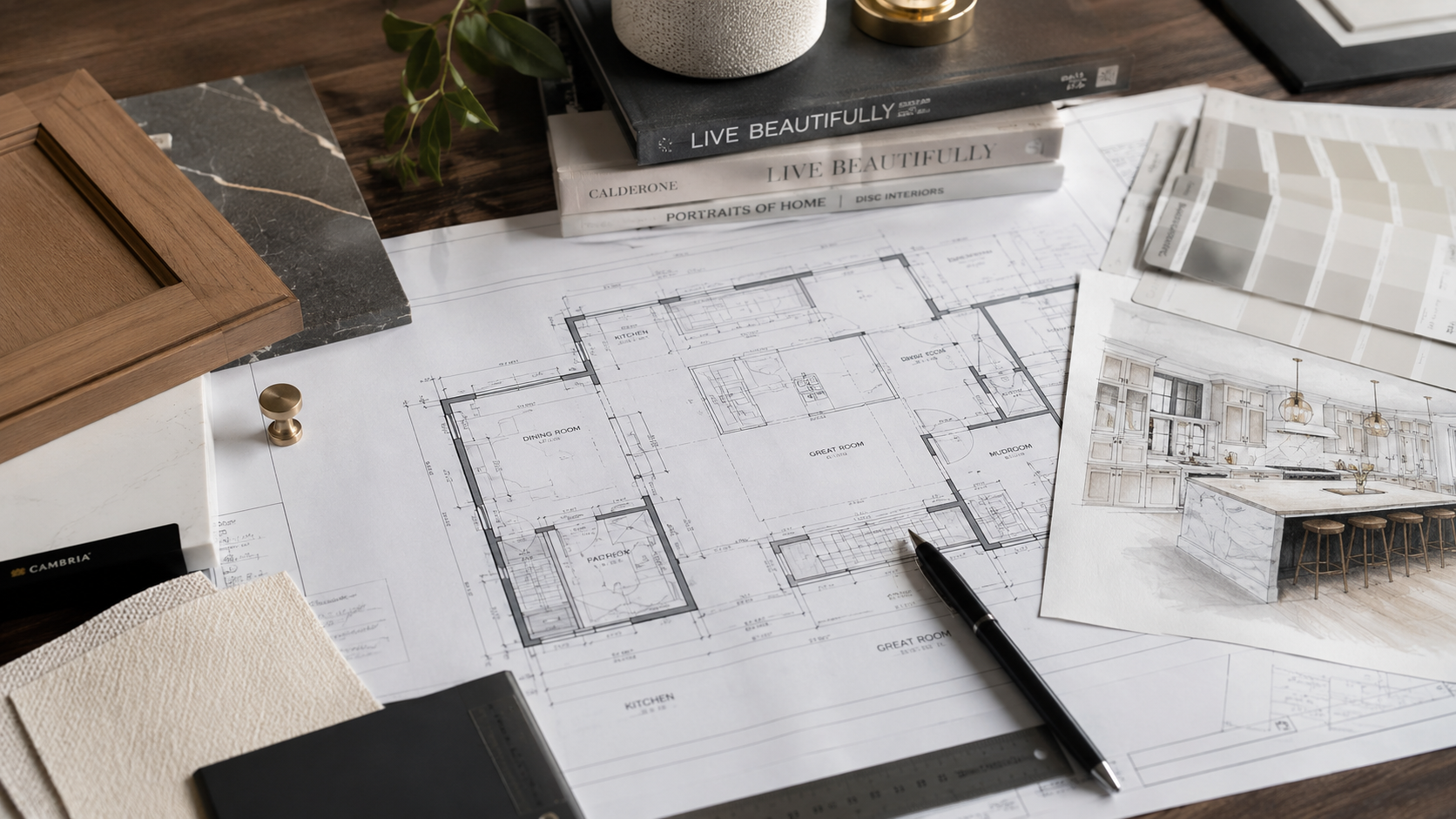
Luxury interior design plans and kitchen remodeling selections in Birmingham MI featuring architectural drawings, cabinetry samples, and high-end design materials by Maxwell Building Services

Thoughts of: Joe Guadagnino (Owner and Builder)

When searching for a remodeling contractor in Birmingham, homeowners quickly discover that not all design and remodeling firms operate the same way. While many companies subcontract nearly every phase of construction, Maxwell Building Services has built a different kind of remodeling company focused on craftsmanship, accountability, and a true white-glove remodeling experience.

As a leading kitchen remodeling company in Birmingham, MI and a trusted luxury remodeling contractor serving Metro Detroit, our approach is centered around quality control, in-house tradesmen, and high-end project management from start to finish.

A Different Approach to Kitchen and Bathroom Remodeling in Birmingham, MI

Many remodeling contractors in Birmingham, MI primarily function as sales and management companies. After securing the project, they subcontract most of the labor to outside crews that may have never worked together before.

At Maxwell Building Services, we maintain skilled in-house tradesmen for many of the most important phases of construction, including:

• Framing
• Drywall installation and finishing
• Painting
• Tile installation
• Finish carpentry
• General carpentry
• Interior remodeling work

This creates a much more consistent and controlled remodeling process for homeowners looking for luxury kitchen remodeling in Birmingham, MI, high-end bathroom remodeling, or full-home interior renovations.

Better Quality Control for High-End Remodeling Projects

One of the biggest advantages of working with an in-house remodeling team is superior quality control.

Because our crews work together daily, they understand the level of craftsmanship and detail required for luxury remodeling projects in Birmingham, Michigan. Each trade works cohesively with the next, helping eliminate many of the common issues homeowners experience with heavily subcontracted projects.

For example:

Proper framing creates straighter walls and cleaner layouts.
Professional drywall finishing creates smoother paint finishes.
Correct tile preparation results in longer-lasting installations.
Detailed finish carpentry creates sharper lines and a more refined appearance.

When homeowners invest in a luxury kitchen remodel in Birmingham, MI or a custom bathroom renovation, those details matter.

White-Glove Remodeling Services in Birmingham, Michigan

At Maxwell Building Services, we believe remodeling should feel organized, professional, and well-managed from beginning to end.

Our white-glove remodeling process is designed to minimize stress while protecting the homeowner’s property throughout construction.

Our process often includes:

• Dust containment systems
• HEPA air scrubbers and air filtration
• Floor and surface protection
• Daily jobsite cleanup
• Organized staging areas
• Professional communication
• Detailed scheduling and coordination
• Respectful crews and project management

Many homeowners searching for luxury remodeling companies in Birmingham, MI are not just looking for beautiful results. They are also looking for a professional experience throughout the construction process.

Luxury Kitchen Remodeling in Birmingham, MI

Kitchen remodeling remains one of the most popular home improvement investments in Birmingham, Michigan.

Our team specializes in luxury kitchen remodeling that combines timeless design, premium materials, and functional layouts tailored to modern families. Many of our projects feature:

• Custom and semi-custom cabinetry
• Dura Supreme Cabinetry
• Large kitchen islands
• Open-concept floor plans
• Custom range hoods
• Hardwood flooring
• Designer tile installations
• Premium lighting packages
• Hidden storage solutions
• High-end appliance integration

As a Birmingham kitchen remodeling contractor, our goal is to create kitchens that feel both elegant and highly functional for everyday living.

Bathroom Remodeling in Birmingham, MI

In addition to kitchens, Maxwell Building Services also specializes in luxury bathroom remodeling in Birmingham, MI.

Our bathroom renovation projects often include:

• Custom walk-in showers
• Freestanding soaking tubs
• Heated flooring systems
• Premium tile work
• Floating vanities
• Frameless glass enclosures
• Spa-inspired layouts
• Waterproofing systems
• Custom lighting and finish details

Our in-house tile installers and finish carpenters help ensure these spaces are completed with a higher level of detail and craftsmanship.

Why Birmingham Homeowners Prefer In-House Remodeling Teams

Homeowners searching for the best remodeling contractor in Birmingham, MI often value communication, accountability, and consistency just as much as design.

Because much of our work is completed by internal crews, we are able to maintain tighter scheduling, faster communication, and stronger oversight throughout the project.

This helps create:

• Better project organization
• Improved scheduling efficiency
• More consistent workmanship
• Faster problem solving
• Greater accountability
• A smoother homeowner experience

Instead of coordinating multiple disconnected subcontractors, homeowners work with a remodeling company that operates as one cohesive team.

A Luxury Remodeling Contractor Focused on Craftsmanship

At Maxwell Building Services, we are passionate about delivering luxury remodeling services that combine thoughtful design, professional construction management, and high-end craftsmanship.

Whether you are planning a kitchen remodel in Birmingham, MI, a bathroom renovation, basement remodel, or full interior transformation, our team focuses on creating beautiful, functional spaces while delivering a remodeling experience built around professionalism, communication, and attention to detail.

For homeowners looking for a trusted design and remodeling company in Birmingham, Michigan, our combination of in-house craftsmen and white-glove service continues to set us apart from traditional remodeling firms.