
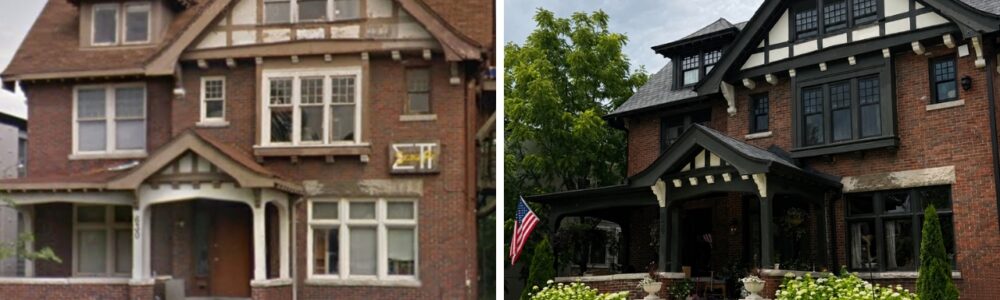
Restoring a Piece of Detroit History: The Story Behind Our 1906 Tudor Renovation, Part 1
Thoughts of: Joe Guadagnino (Owner and Builder)
Restoring a Piece of Detroit History: The Story Behind Our 1906 Tudor Renovation
Some homes are purchased for convenience. Others are purchased for location. And every once in a while, a home comes along that captures your imagination the moment you walk through the front door.
That was exactly the case when my bride Alyce and I purchased this historic brick Tudor in one of Detroit’s most distinguished historic neighborhoods.
Built in 1906, the home had stood proudly for more than a century. It had witnessed Detroit’s rise as an industrial powerhouse, survived economic downturns, weathered countless Michigan winters, and housed generations of residents. For nearly 40 years, the property even served as housing for students associated with Wayne State University.
While the home had incredible architectural character, it was clear that decades of use, modifications, and deferred maintenance had taken their toll.
Yet beneath the layers of change, we could see something special.
We could see what the home once was.
And more importantly, we could see what it could become again.
Why We Took On This Historic Home Renovation
As the owner of Maxwell Building Services, I’ve spent years helping homeowners throughout Detroit, Birmingham, Bloomfield Hills, Plymouth, Grosse Pointe, Franklin, Beverly Hills, and Metro Detroit transform their homes through thoughtful design and remodeling.
We’ve renovated homes from nearly every era, from historic Tudors and Colonials to modern luxury residences.
But this project was different.
This wasn’t a client’s home.
This was our home.
For Alyce and I, this project represented an opportunity to preserve a piece of Detroit history while creating a home designed for the way our family lives today.
Historic homes have a soul that is difficult to describe.
The craftsmanship, proportions, masonry work, trim details, and architectural elements found in homes built during the early 1900s are incredibly difficult and expensive to recreate today.
Many of the historic homes we work on throughout Detroit, Birmingham, Plymouth, Grosse Pointe, and Bloomfield Hills share these same characteristics. They were built during an era when homes were designed to last generations, not decades.
Unfortunately, many historic homes have experienced renovations over the years that failed to respect the original architecture.
This home was no exception.
What We Found Behind the Walls
What started as a renovation quickly evolved into a full-scale historic restoration and remodeling project.
The home consists of approximately 4,200 square feet of living space and required far more than cosmetic updates.
To properly restore the home, virtually the entire interior had to be removed.
The project involved a complete gut renovation.
Walls came down.
Mechanical systems were removed.
Outdated plumbing and electrical systems were demolished.
Much of the interior framing required modification or replacement.
As we began opening walls, we were constantly reminded how differently homes were constructed in the early 1900s.
Unlike today’s wood-framed construction methods, the exterior walls of this home consist of three wythes of solid brick masonry. In simple terms, there are three full layers of brick making up the exterior structure.
These walls have stood for more than 120 years.
And they will likely stand for another 120.
There is something incredibly impressive about working on a structure built by craftsmen over a century ago.
It reminds you that quality construction never goes out of style.
Historic Home Design Requires a Different Approach
One of the biggest misconceptions about historic home remodeling is that it simply involves updating finishes.
In reality, historic home design requires a completely different mindset.
When renovating a historic home, every decision must balance preservation with functionality.
The goal isn’t to recreate a museum.
The goal is to create a home that respects its original architecture while supporting modern living.
That means understanding period-appropriate materials, architectural details, trim profiles, room proportions, and craftsmanship techniques that were common when the home was originally built.
Many homeowners are surprised to learn that some of the most important design decisions involve what not to change.
Successful historic home remodeling often means preserving original details while thoughtfully integrating modern conveniences.
Throughout this project, we focused on maintaining the home’s architectural integrity while improving functionality, comfort, storage, and flow.
The best historic renovations feel seamless.
Guests shouldn’t be able to tell where the original home ends and the renovation begins.
Designing a Home for the Next 100 Years
One of the biggest challenges with historic home remodeling is finding the right balance between preservation and modernization.
Many homeowners assume historic remodeling means recreating the past exactly as it was.
We see it differently.
Our goal is not to freeze a home in time.
Our goal is to respect the home’s history while making it work for modern life.
That philosophy guided every decision throughout this project.
The floor plan was redesigned to improve flow and functionality.
A new first-floor addition was carefully designed and integrated into the home’s architecture.
Modern conveniences were incorporated throughout the home.
Storage solutions were added where previous generations never needed them.
Mechanical systems were completely upgraded.
And every design decision was made with both beauty and longevity in mind.
We often tell clients that successful historic remodeling is less about making a house look old and more about making new work feel original.
When someone walks through a historic home after renovation, they shouldn’t immediately notice what is new.
Instead, everything should feel like it belongs.
Luxury Design Inspired by the Early 1900s
One of the most rewarding parts of this project was developing the interior design vision.
Rather than chasing trends that may look dated in a few years, we focused on timeless materials and architectural details inspired by the home’s original era.
Custom cabinetry was designed specifically for each space.
Architectural millwork was carefully developed to complement the home’s Tudor and Victorian influences.
Natural stone, handcrafted finishes, premium plumbing fixtures, designer lighting, and custom furniture selections were chosen to create a cohesive design throughout the home.
Every room was considered as part of a larger story.
The goal wasn’t simply to create beautiful spaces.
The goal was to create a home that felt authentic.
Throughout the project, we continually asked ourselves:
“If the original architect walked through this home today, would he believe it belonged here?”
That question became our filter for every design decision.
Historic Home Remodeling Throughout Metro Detroit
While this project is located in Detroit, many of the lessons learned apply to historic homes throughout Metro Detroit.
Communities such as Birmingham, Plymouth, Grosse Pointe, Franklin, Bloomfield Hills, Royal Oak, and Huntington Woods are filled with homes that deserve thoughtful renovation rather than replacement.
Many of these homes feature original craftsmanship, solid construction, and architectural character that simply cannot be replicated today.
When properly renovated, these homes offer a unique combination of history, charm, and modern functionality.
At Maxwell Building Services, we believe preserving these homes is about more than construction.
It’s about protecting the architectural heritage of our communities for future generations.
Why Historic Home Remodeling Matters
One of the reasons we enjoy working on historic homes throughout Detroit and the surrounding communities is that every project is unique.
Unlike production homes, historic homes require creativity, problem solving, craftsmanship, and a deep understanding of architecture.
No two projects are ever the same.
Every wall tells a story.
Every discovery teaches a lesson.
Every challenge presents an opportunity to improve the home while preserving its character.
These homes connect us to the generations that came before us.
When renovated thoughtfully, they can continue serving families for another century.
Historic home remodeling isn’t simply about construction.
It’s about stewardship.
Frequently Asked Questions About Historic Home Renovations
How much does it cost to renovate a historic home in Detroit?
Historic home renovation costs vary significantly based on size, condition, scope, and finish selections. Major historic home renovations often involve structural, electrical, plumbing, HVAC, and architectural restoration work in addition to cosmetic improvements.
Can you add onto a historic home?
Yes. In many cases, carefully designed additions can significantly improve functionality while maintaining the home’s architectural integrity. The key is ensuring the addition complements the original structure rather than competing with it.
Are historic homes harder to renovate?
Absolutely. Historic homes often contain hidden conditions, outdated systems, structural modifications from previous renovations, and unique architectural details that require specialized planning and craftsmanship.
Is it worth renovating a historic home?
For many homeowners, absolutely. Historic homes offer character, craftsmanship, and architectural features that are difficult to replicate in new construction. When thoughtfully renovated, they can provide the best of both worlds: historic charm and modern comfort.
The Beginning of a New Chapter
Today, this 1906 Detroit Tudor is no longer a neglected historic property struggling to meet modern needs.
It is a carefully restored and thoughtfully remodeled family home that honors its past while embracing the future.
For my bride Alyce and me, this project became much more than a renovation.
It became a passion project.
A labor of love.
A chance to preserve a piece of Detroit history while creating a home where our family can build memories for years to come.
Over the coming months, we’ll continue sharing the story behind this remarkable transformation, including the design process, structural challenges, custom cabinetry, historic preservation details, and the countless lessons learned throughout the renovation.
If you’re considering a historic home renovation in Detroit, Birmingham, Plymouth, Grosse Pointe, Franklin, Bloomfield Hills, or anywhere throughout Metro Detroit, we hope this story inspires you to see the potential hidden within these incredible homes.
Because sometimes the most rewarding homes aren’t the newest ones.
They’re the ones with the best stories to tell.
Follow Along With Our Detroit Historic Home Renovation Series
This article is Part 1 of our Detroit Historic Home Renovation Series, documenting the complete restoration, design, and remodeling of our 1906 Tudor home.
In this series, we’ll share the challenges, discoveries, design decisions, and construction techniques involved in transforming a historic Detroit home while preserving its architectural integrity.
Coming Next: Part 2 – What We Found After Opening the Walls
One of the most fascinating aspects of renovating a 120-year-old home is discovering what lies hidden behind the plaster, framing, and finishes.
In Part 2, we’ll take you behind the scenes of demolition and share some of the surprises we uncovered after opening the walls, including structural discoveries, outdated systems, construction methods from the early 1900s, and lessons every homeowner should understand before taking on a historic renovation.
Be sure to check back soon for Part 2 of our Detroit Historic Home Renovation Series.
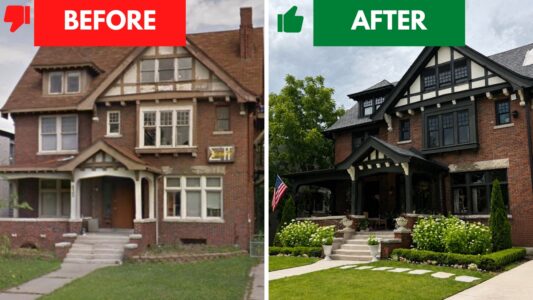
Before renovation: A historic 1906 brick Tudor located in a Detroit historic neighborhood prior to a complete interior remodel, restoration, and luxury addition project.