
Restoring a Piece of Detroit History: Bringing Our 1906 Detroit Tudor Into the 21st Century, Part 2
Thoughts of: Joe Guadagnino (Owner and Builder)
When we first walked through our 1906 Detroit Tudor, we knew we were buying a home with incredible history. What we didn’t know was just how much work it would take to prepare it for the next century.
Once the walls came down, the house began telling us its story.
Every room revealed another chapter. Wiring that had been added over decades. Plumbing that had been modified by previous owners. Framing that had been altered as families adapted the home to fit their needs. None of it was unusual for a house built in the early 1900s, but it reinforced something we already believed.
If we were going to restore this home, we were going to do it the right way.
Rather than simply replacing what was visible, we made the decision to completely rebuild everything hidden behind the walls. Our goal wasn’t just to create a beautiful home for today. We wanted to build a home our daughters, Frankie and Rose, could one day look back on knowing it was restored to last another hundred years.

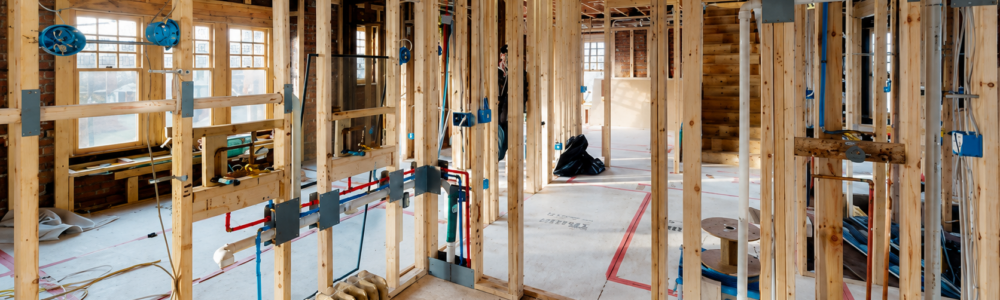
With the walls open, we rebuilt the home’s infrastructure from the inside out. This phase of our 1906 Detroit Tudor renovation included new structural framing, rough electrical, plumbing, HVAC preparation, and floor system reinforcement before insulation and drywall.
It all started with the electrical system.
The original service had long outlived its intended lifespan, so we replaced everything. Beginning at the utility pole in the backyard, we installed a brand-new electrical service and completely rewired the home. Every circuit, outlet, switch, and panel is new, giving this 120-year-old home the safety and reliability expected in modern construction while preserving its historic character.
The plumbing received the same level of attention.
Rather than trying to work around generations of previous repairs, every water line and drain was replaced. It’s the kind of work no one will ever notice after the drywall is finished, but it’s one of the most valuable investments you can make during a historic home renovation.

Every system inside this 1906 Detroit Tudor was rebuilt from the ground up. With the walls open, we installed all-new framing, plumbing, electrical, and HVAC systems while preserving the home’s historic architecture and preparing it for another century of family living.
One of the upgrades we’re most excited about is bringing modern comfort to a home built long before air conditioning existed.
We installed central air conditioning throughout the house while preserving one of its most defining features: the original steam radiator system. A new boiler now powers those beautiful cast-iron radiators, allowing us to maintain the warmth and character that have been part of this home for over a century while adding the comfort every family expects today.

Bringing modern comfort to a 120-year-old home. This new high-efficiency HVAC system provides central air conditioning while working alongside the home’s restored steam heating system, giving our 1906 Detroit Tudor the best of both worlds.
Energy efficiency was another priority.
Homes built in 1906 weren’t designed with today’s insulation standards, so while everything was exposed, we took the opportunity to do what couldn’t be done once the walls were closed. Every exterior wall and the roof structure was spray foamed, and the entire home was carefully air sealed. These improvements will make the house quieter, more comfortable, and dramatically more efficient without changing a single architectural detail.

Modern performance meets historic preservation. During the renovation of our 1906 Detroit Tudor, we spray foamed the roof structure to improve energy efficiency while preserving the home’s original steam radiators and architectural character. These hidden upgrades will make the home more comfortable for generations without changing its historic appearance.
Of course, restoring a historic home is never just about mechanical systems.
As we worked through the house, we reinforced floor framing, reframed sections of interior walls, repaired structural members, and rebuilt areas of the floor decking that had weakened over time. None of this work will ever be featured in a design magazine, but it’s the foundation that allows every beautiful finish to last for generations.
This stage of the project may not have the glamour of custom cabinetry, marble countertops, or handcrafted trim, but in many ways, it’s the most important part of the entire renovation.
Beautiful finishes are only as good as what’s behind them.
As owners of Maxwell Building Services, we’ve completed countless home renovations throughout Detroit, Birmingham, Bloomfield Hills, Grosse Pointe, Franklin, Plymouth, and communities across Metro Detroit. Every project reinforces the same lesson: quality craftsmanship begins long before the paint goes on the walls.
Standing inside this home today, it’s incredible to think about everything that’s hidden behind the finished surfaces. New electrical. New plumbing. Modern HVAC. Spray foam insulation. Reinforced framing. A completely rebuilt infrastructure that no one will ever see, yet everyone who lives here will benefit from every single day.
Restoring a historic home isn’t about turning back the clock.
It’s about honoring the craftsmanship of the past while giving the home everything it needs for the future.
Our 1906 Detroit Tudor has already stood proudly for more than a century.
Now it’s ready for the next one.
Follow Along With Our Detroit Historic Home Renovation Series
This is Part 2 of our renovation journey, documenting the complete restoration of our family’s 1906 Detroit Tudor.
In Part 3, we’ll take you through one of the biggest transformations of the entire project as we redesign the floor plan and construct a carefully integrated first-floor addition that respects the home’s historic architecture while creating a layout designed for modern family living.